
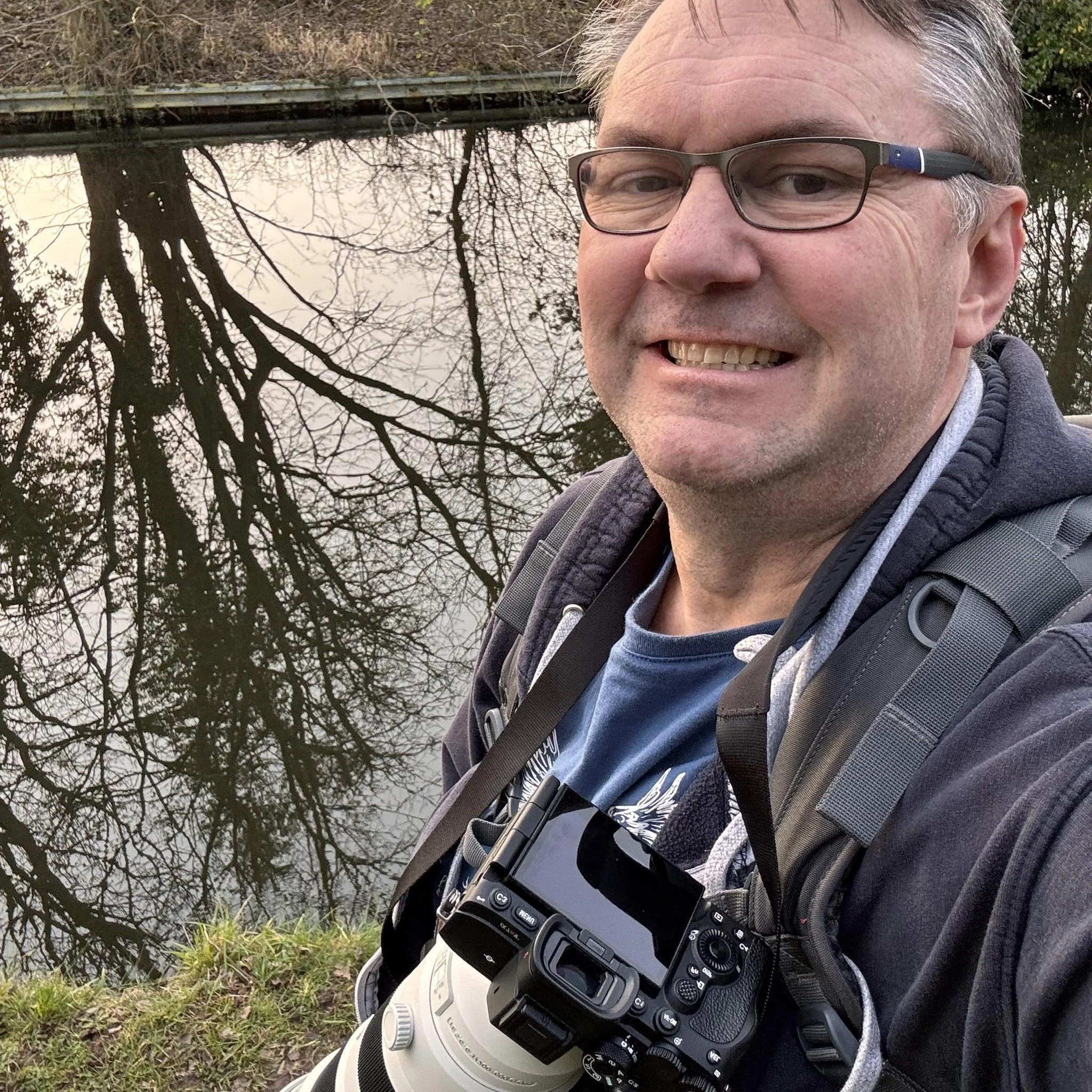
Hi, I’m Francois Viljoen.
This isn’t a business—it’s a reflection of what I believe in.
Photography without emotion is just empty documentation.
I spend many hours in this quest - to try and capture images that really makes the viewer feel something when they look at my work.
I do primarily Wildlife and Nature Photography, and recently broadened my work to include pets and farm animals on request.
My Approach
Equipment
Photography, at its core, is not a science—it is a feeling.
Somewhere along the way, people began to treat it like a formula to be solved. Aperture, shutter speed, ISO, dynamic range, sharpness—these became the language of photography. Conversations shifted from what does this image make you feel? to what settings did you use? The camera became less of a vessel for expression and more of a machine to be mastered.
But an image has never made someone pause, reflect, or feel something deeply because it was perfectly exposed.
No one has ever stood in front of a photograph, heart stirred, and thought about the f-stop.
What lingers is something else entirely.
It’s the quiet loneliness in a dimly lit street.
The warmth of a fleeting glance between two people.
The chaos of motion frozen just long enough to be understood.
The tension, the nostalgia, the unease, the joy.
These are not technical achievements—they are emotional ones.
The truth is, the viewer does not experience your settings. They experience themselves, reflected through what you chose to show. A blurry image can feel more honest than a perfectly sharp one. Harsh light can say more than balanced exposure ever could. Even imperfection, often dismissed as error, can become the very thing that gives an image its voice.
The science of photography is important, but only in the way grammar is important to poetry. It provides structure, yes—but structure alone does not move anyone. Mastery of rules does not guarantee meaning. In fact, an obsession with technical perfection can strip an image of the very thing that makes it worth looking at: its humanity.
Photography is not about accuracy—it is about interpretation.
It is not about what the camera sees—it is about what the viewer feels.
And in the end, the most powerful photographs are not the ones that prove the photographer’s skill, but the ones that quietly, unmistakably, leave something behind in the person who sees them.
I always find that I am quite brand loyal.
My first proper Camera was a Sony, and although I shopped around before investing in these bodies, everyone I spoke to advised me to stay within an ecosystem I know.
There are no regrets for sticking with Sony.
So let me take you through my gear:
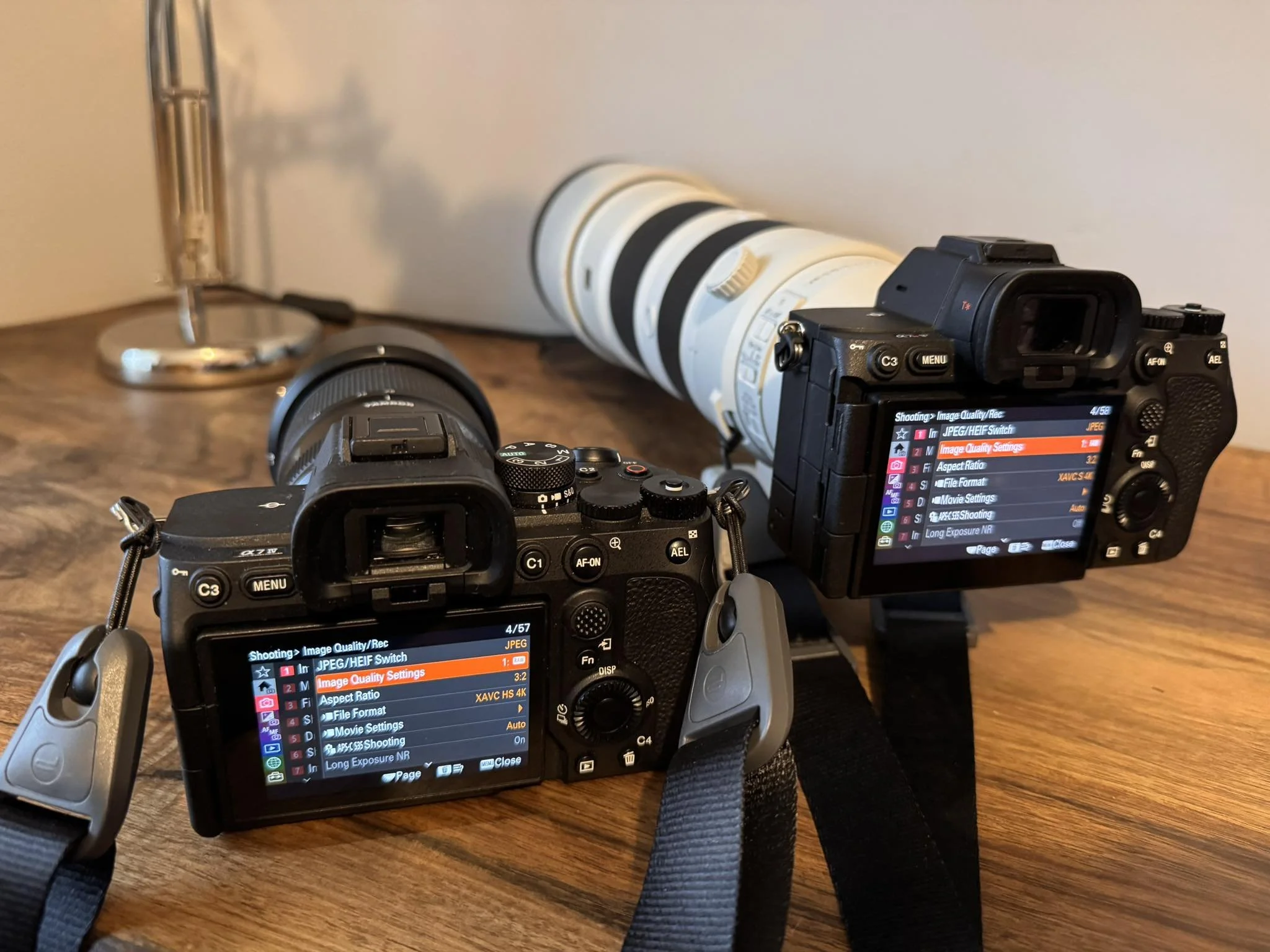
Primary Wildlife Body: This is the powerful Sony A7RV. It does everything I need. Reasons why I use this body would be the AI autofocus that works incredibly well. Coupled with the 61 MegaPixel resolution which mean I can crop loads in post makes this the perfect body for far-reaching wildlife shots in my opinion. Most of my wildlife photos are taken with this body.
Primary Portrait and Landscape Body: For this, I use the Sony A7IV. Why? This camera has the same processing power as Sony’s best camera, but it has a smaller sensor in terms of MegaPixels. And all that extra processing power is used to take immaculate pictures in low light, perform fast and effortless.
Wildlife Lens: I use the Sony FE 200 600 F5.6-6.3 OSS Lens. Maximum reach. Fast. And not too bulky. Also like the versatility of 200-600 so the odd sunrise can also be captured with this lens.
Portrait and Landscape Lens: Here I use a lens from Tamron - the 28-75 F2.8 DI II. Does a good enough job. The macro capability is impressive. However, I am looking replace this lens with the Sony 50-150 F2 at some stage. Brand Loyalty…